So, why are brands putting more money into creators?
Here are 10 major reasons.
1. Influencers Help Brands Reach the Right Audience
Traditional advertising can put a brand in front of millions of people. But that does not always mean those people are interested in the product.
Influencer marketing works differently.
A fitness creator can reach people interested in fitness. A beauty creator can reach makeup and skincare buyers. A finance creator can speak directly to people interested in investing or personal finance.
This makes influencer marketing more targeted.
Brands can select creators based on their audience, location, language, interests and content style instead of simply buying a large number of impressions.
For Indian brands, this is especially useful because the country's audience is extremely diverse.
2. Consumers Trust Recommendations From Creators
People do not always want to hear a brand talk about how good its own product is.
They are more likely to pay attention when someone they follow demonstrates the product, shares an experience or explains how they use it.
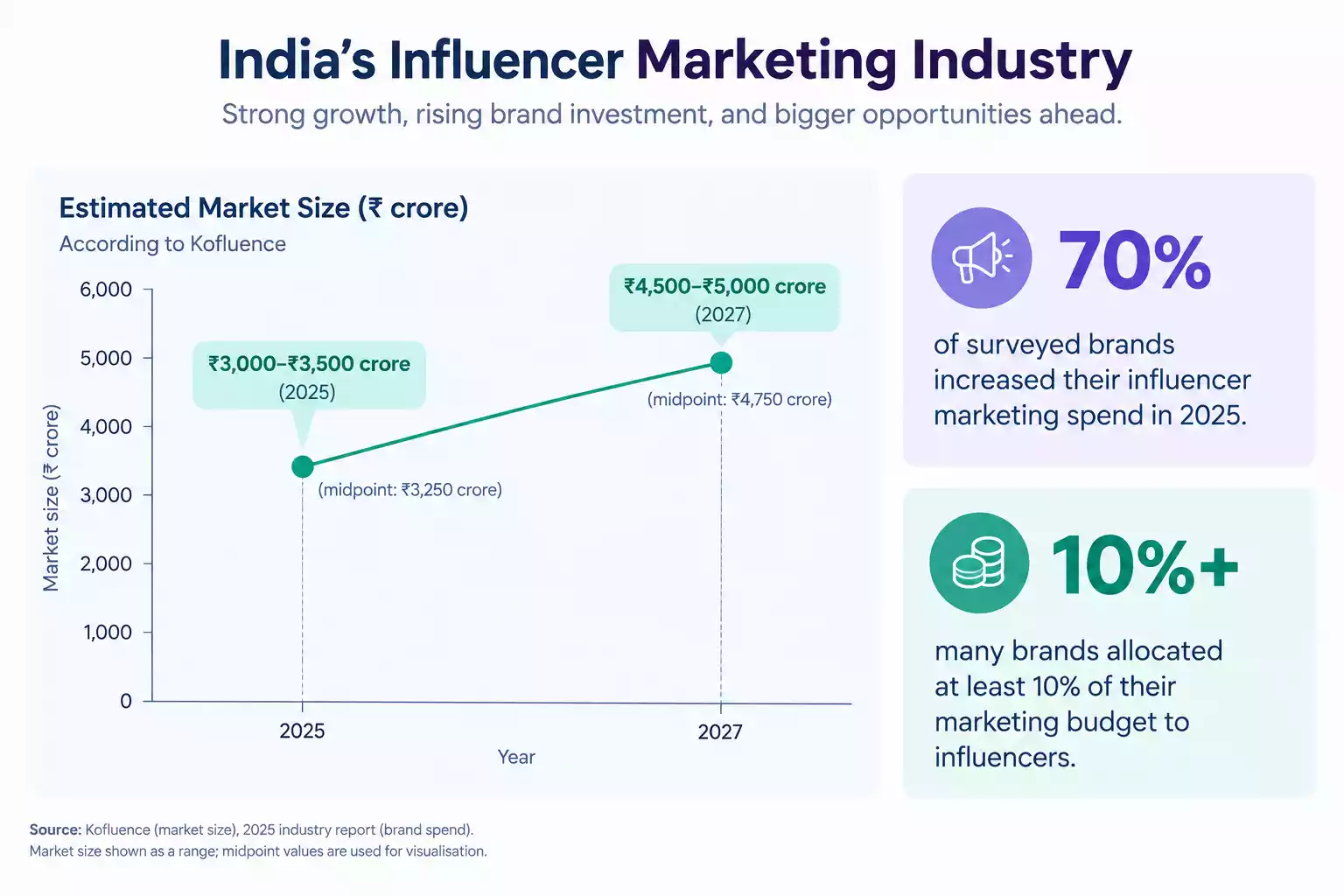
A 2025 India influencer marketing report found that around 70% of brands consider trust and credibility major reasons for working with influencers.
This does not mean every creator automatically creates trust.
The creator needs to have a genuine connection with the audience. That is why brands are increasingly looking beyond follower numbers and paying attention to content quality and relevance.
3. Short-Form Video Has Changed Brand Advertising
Instagram Reels and YouTube Shorts have changed the way people consume content.
People can discover a product while watching a 30-second video, save it, share it with a friend and potentially purchase it within minutes.
This gives brands a much faster way to introduce products to consumers.
Creators are already skilled at making short videos that fit naturally into these platforms. Instead of creating every piece of content from scratch, brands can work with creators who understand what their audience actually watches.
This is one reason influencer marketing fits so well into today's digital advertising strategy.
4. Regional and Tier-2 Creators Are Opening New Markets
India is not just a metro-city market.
Consumers in Tier-2 and Tier-3 cities are becoming increasingly important for brands. At the same time, regional-language content is becoming a bigger part of influencer campaigns.
Kofluence's 2026 research found that more than 62% of creators reported an increase in regional and vernacular campaign briefs. It also reported that engagement rates in Tier-3 and Tier-4 markets were around 4.5%–5.5%, compared with roughly 3%–4% in metro markets.
For brands, this creates a major opportunity.
A Marathi, Tamil, Bengali, Kannada or Telugu creator can communicate with an audience in a way that a national advertisement may not.
And this is encouraging brands to put more budget into regional creator campaigns.
5. Micro-Influencers Can Deliver Strong Engagement
Big celebrities have enormous reach, but brands do not always need millions of followers.
Sometimes, a creator with 20,000, 50,000 or 100,000 followers can be more useful for a specific campaign.
Micro-influencers often build communities around a particular interest or location. Their audiences may see them as more relatable and approachable.
That makes them useful for product reviews, demonstrations, local campaigns and niche categories.
The growth of micro and niche creators is also helping brands spread their budgets across several creators instead of putting the entire budget behind one large influencer.
6. Influencer Marketing Can Support Sales, Not Just Awareness
One of the biggest changes in influencer marketing is the focus on measurable results.
Earlier, brands often looked at views, likes and comments.
Today, they can track clicks, coupon codes, affiliate sales, website visits, leads and conversions.
Kofluence's 2026 report found that 13.3% of brands now directly connect influencer marketing spending with formal revenue targets, while another 46.4% use campaign-level performance accountability.
That changes the conversation inside marketing teams.
When influencer campaigns can be connected to business results, it becomes easier for marketers to justify increasing the budget.
7. Creators Produce Content Brands Can Reuse
Influencer marketing is not only about reaching the creator's audience.
The content itself can become a valuable marketing asset.
A brand can potentially reuse creator videos across social media, paid advertisements, product pages and other digital campaigns, depending on the agreed usage rights.
This makes influencer partnerships attractive to brands that need a constant flow of fresh content.
Instead of producing every video through a traditional production setup, brands can work with several creators and develop multiple content styles around the same product.
The result is more content and more creative variety.
8. Long-Term Creator Partnerships Are Becoming More Common
Brands are also moving away from one-off influencer posts.
Long-term partnerships allow creators to understand the brand better and communicate its products more naturally over time.
According to Kofluence's 2026 research, around 62% of brand professionals surveyed said long-term creator partnerships deliver better ROI than one-off campaigns.
This is important because audiences can quickly recognise when a creator is promoting a product only because they were paid for one post.
A longer relationship can feel more natural.
For brands, it can also create consistent visibility instead of short bursts of attention.
9. Influencer Marketing Helps Brands Stay Relevant
Consumer attention is constantly moving.
New trends appear on Instagram. New creators become popular on YouTube. New formats spread across social platforms.
Brands that want to stay relevant need to understand these changes.
Creators are already part of these conversations.
They know the formats their audiences enjoy, the language they use and the topics that are getting attention.
This makes creators useful not only as promotional partners but also as a source of cultural and audience insight.
BCG's research found that India's 2–2.5 million monetised creators already influence more than $350–$400 billion in consumer spending, with creator-influenced consumption projected to exceed $1 trillion by 2030.
That shows why brands increasingly see creators as part of the wider consumer journey.
10. Influencer Marketing Is Becoming a Core Marketing Channel
Perhaps the biggest reason budgets are increasing is simple: influencer marketing is becoming a normal part of the marketing mix.
It is no longer limited to fashion and beauty brands.
E-commerce, FMCG, automotive, consumer technology, finance, food, travel and many other categories are using creators.
Kofluence reported that e-commerce accounted for the largest share of sectoral influencer marketing spend at 23% in 2025, followed by FMCG at 19%. Instagram was identified as the primary influencer marketing platform by 93.1% of brands surveyed.
As more industries adopt creator campaigns, brands are also becoming more comfortable assigning dedicated budgets to them.
What This Means for Indian Brands?
The rise in influencer marketing budgets does not mean brands should simply spend more money on creators.
The smarter approach is to spend better.
Brands need to choose creators based on audience fit, content quality, engagement, credibility and campaign goals. They also need to measure what happens after the post goes live.
A campaign with 10 carefully selected creators can sometimes be more useful than a campaign with one creator who has a much larger following.
The Indian influencer marketing market is also becoming more organised. Brands are moving towards long-term partnerships, regional creators, performance tracking and better campaign measurement.
Conclusion
Indian brands are increasing their influencer marketing budgets because consumers are spending more time with creators, regional audiences are becoming easier to reach, and campaigns can now be measured much more clearly.
But successful influencer marketing is not simply about finding someone with a large following.
It is about finding the right person for the right audience and the right campaign.
For businesses and brands looking to work with celebrities or influencers for promotion, Tring can be the go-to platform for discovering and booking the right talent for brand campaigns, promotions and collaborations. The goal is simple: connect your brand with personalities who can help you reach the audience that matters.



 Birthday Gifts
 Women
Women
 Men
Men
 Anniversary Gifts
 Wedding Gifts
 Search from 15000+ celebs

 We now support international payments