⚠️What Kind of Influencer Scams are Out There?
Influencer marketing has grown fast. And wherever there is money, attention, and brand deals, scams follow. Today, both brands and creators face different types of fraud. Some scams target influencers. Others target businesses. And many look very real at first.
If you know how these scams work, you can avoid losses and protect your reputation. Here are five common influencer scams you should watch out for.
1. Collaboration Scams and Fake Sponsorships
This is one of the most common scams in the influencer space.
In this case, scammers pretend to be real brands or influencer marketing agencies. They contact influencers with “exciting” collaboration offers. The email or message looks professional. The logo looks real. And the offer sounds tempting.
Then they ask for a “registration fee,” “product shipping cost,” or “processing charge.” Once the influencer pays, the scammer disappears.
Sometimes, they also ask creators to share personal details or sign fake contracts.
Brands can also face this scam too. Fake influencers may approach them with fake portfolios and inflated metrics.
How to stay safe:
Always verify brand emails. Check official websites. And never pay money to “get” a collaboration.
2. Phishing Scams
Phishing scams aim to steal login details and access to accounts.
Scammers send messages that look like they’re from Instagram, YouTube, or brand partners. They may say things like:
“Your account will be suspended.”
“Copyright issue detected.”
“Verify your account now.”
They include a fake link. Once you click and log in, your account gets hacked.
After that, scammers may post fake content, message followers, or demand ransom.
Brands also face phishing when fake “influencers” send harmful links.
How to stay safe:
Never click unknown links. Check website URLs carefully. And enable two-factor authentication on all accounts.
3. False Promotion Services
Many services promise “guaranteed growth,” “instant followers,” or “viral engagement.”
They claim they can boost likes, views, and reach within days. Some even show fake screenshots as proof.
In reality, they use bots, fake accounts, or low-quality click farms. This damages your account credibility and can even lead to platform penalties.
For brands, working with influencers who use these services leads to poor campaign results.
How to stay safe:
Avoid services that promise fast growth. Real influence grows slowly. Always check engagement quality, not just numbers.
4. Money in Exchange for Post or Video Likes
In this scam, people offer “paid engagement.”
They say they will give thousands of likes, views, or comments for a small fee. Some influencers and brands fall for this to make posts look popular.
But this engagement comes from bots or paid networks. It doesn’t help reach real users. And platforms can detect it.
Once caught, accounts may lose reach or get restricted.
How to stay safe:
Don’t buy engagement. Focus on organic content and real partnerships instead.
5. Stolen Content and Impersonation
This scam involves copying real influencers.
Scammers steal profile photos, videos, and posts. Then they create fake accounts that look almost identical.
They use these accounts to approach brands, followers, and other creators. They ask for money, promote fake products, or spread phishing links.
Brands sometimes end up paying fake profiles without realizing it.
How to stay safe:
Check verified profiles. Compare follower counts and post history. Contact influencers through official emails or websites.
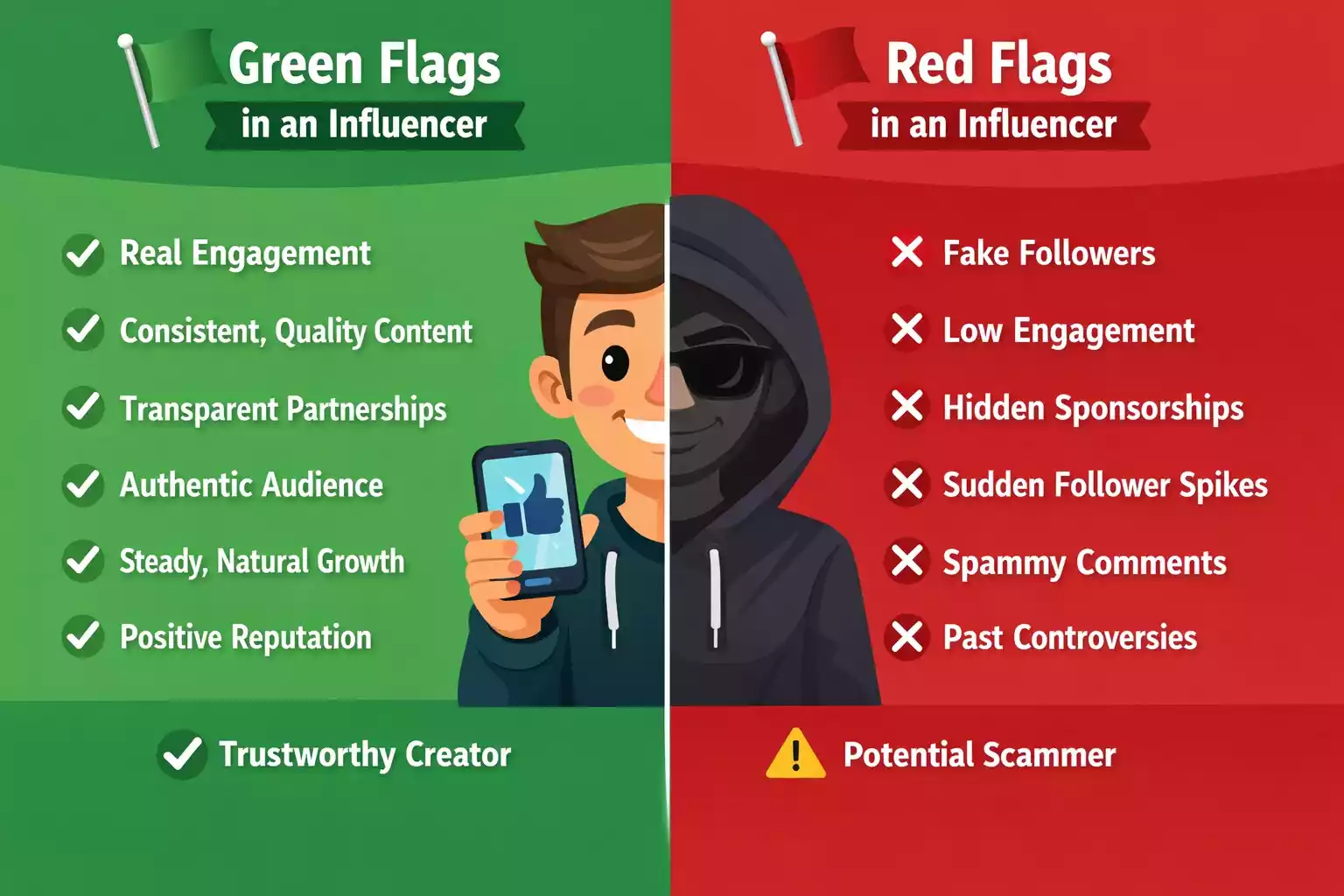
🚩10 Red Flags to Watch for When Partnering with Influencers

Influencer marketing can work really well when done right. But it can also fail badly when brands choose the wrong creators.
Today, it’s easy for anyone to look popular online. You’ll see big follower numbers, polished profiles, and viral videos. But behind that, there may be fake followers, weak engagement, or poor work ethics.
To help you avoid these problems, here are ten major red flags you should always watch for when working with influencers.
1. Low Engagement Despite High Follower Count
An influencer may have 200K followers. But if their posts get only 300 likes and a few short comments, something is wrong.
Low engagement usually means the audience is inactive, fake, or not interested. Real followers react. They ask questions. They share opinions. They save posts.
When engagement is weak, your campaign will also perform poorly. Your message won’t reach people who care.
Pro Tip:
Check the engagement rate using tools like HypeAuditor or Modash. As a basic rule, look for at least 1%–3% engagement for large accounts and higher for smaller ones.
2. Sudden and Unnatural Follower Growth
Healthy accounts grow slowly. They gain followers when content improves, goes viral, or gets media attention.
Fake-heavy accounts grow in strange ways. You’ll see 10K new followers in two days. Then nothing for weeks. Or sudden drops when fake accounts get removed.
These patterns usually mean followers were bought.
Pro Tip:
Use Social Blade to track daily follower growth. Avoid creators with sharp spikes that don’t match their content performance.
3. Generic, Spam-Like Comments
Look at the comments section closely.
If most comments say “Nice pic,” “🔥🔥🔥,” or “Great post” again and again, that’s a warning sign. These are often from bots or engagement pods.
Real comments mention the product, ask questions, or refer to the content.
Generic comments mean low real interest.
Pro Tip:
Open 10–15 recent posts and read at least 50 comments. If more than half look copied or meaningless, reconsider the partnership.
4. Inconsistent or Low-Quality Content
Good influencers are consistent. Their videos look clear. Their captions make sense. Their posting schedule is regular.
Low-quality creators post randomly. Poor lighting. Weak editing. Rushed captions. No clear theme.
This affects how your brand looks when featured.
Pro Tip:
Review their last 3 months of content. If quality drops often or feels careless, they may not treat brand work seriously either.
5. Poor Brand Fit and Audience Mismatch
An influencer may be popular. But if their audience doesn’t match your target market, your campaign won’t work.
For example, a gaming creator promoting luxury skincare rarely makes sense. The audience won’t care.
Also check location, age group, and interests.
Pro Tip:
Use audience insights tools like HypeAuditor or Meta Creator Marketplace to check follower demographics before finalizing.
6. Lack of Transparency About Past Partnerships
Trust matters in influencer marketing.
Some creators hide paid partnerships. They don’t disclose ads. They delete old sponsored posts. Or they promote competing brands too often.
This hurts credibility. And it can create legal problems for your brand.
Pro Tip:
Scroll through past posts and stories. Check how they disclose ads. Ask directly for examples of previous brand work before signing.
7. Unrealistic Pricing or Performance Promises
Be careful of influencers who say things like:
“I guarantee 10,000 sales.”
“Your product will go viral.”
“You’ll recover your investment in one week.”
No one can promise that.
Some also charge very low rates to hide poor quality. Others overcharge without proof of results.
Pro Tip:
Ask for past campaign screenshots showing reach, clicks, and conversions. Compare rates with similar creators in the same niche.
8. Weak Communication and Unprofessional Behavior
Slow replies. Missed calls. Vague answers. Delayed content. These are warning signs.
If an influencer is careless before signing, it usually gets worse after payment.
Professional creators respect deadlines. They ask questions. They confirm details.
Poor communication leads to stress and poor campaigns.
Pro Tip:
Do a short trial project or test post first. It helps you judge reliability before long-term deals.
9. Overdependence on Paid Engagement
Some influencers boost every post using ads. Or they buy likes and views regularly.
This creates fake popularity. It looks good on the surface but disappears when promotions stop.
Your branded content may not perform once the boost ends.
Pro Tip:
Ask if posts are promoted. Then check reach vs engagement. Organic posts usually show stable interaction over time.
10. Negative Reputation or Controversial History
An influencer’s past matters.
Old offensive posts. Public fights. Scams. Fake giveaways. Or bad brand reviews can come back to hurt you.
Once your brand is linked to controversy, damage control becomes hard.
Pro Tip:
Google their name. Search on X, Reddit, and Instagram. Look for past issues before finalizing contracts.

❓3 Reasons Why Identifying Red Flags Early Is Important
Below are three key reasons why early influencer vetting matters.
1. Impact on Budget and ROI
Influencer marketing works only when your investment brings returns. But if you partner with creators who have fake followers, low engagement, or weak credibility, your money goes nowhere.
You may pay for posts that get likes from bots. Or clicks that never convert. And that hurts your return on investment.
And once the budget is spent, there is no easy way to recover it.
By checking red flags early, you protect your campaign from poor performance. You also make sure your money supports creators who can actually drive awareness and sales.
In simple words, better screening leads to better results.
2. Brand Reputation Risks
Your brand is judged by the people who represent it. When an influencer behaves unprofessionally, spreads misinformation, or gets involved in controversies, your brand gets linked to that behavior.
And that can damage trust.
Followers may question your values. Customers may lose confidence. And rebuilding reputation takes time.
But when you identify warning signs early, you avoid risky partnerships. You choose creators who match your tone, ethics, and audience expectations.
And that helps your brand stay credible and respected.
3. Long-Term Campaign Performance
Influencer marketing is not about one post. It is about building consistent visibility and trust over time.
But weak influencers cannot support long-term growth. They deliver short bursts of attention. Then everything drops.
And that breaks campaign momentum.
By filtering out red flags early, you create partnerships that last. You work with creators who grow with your brand. Who understand your goals. And who keep delivering value.
That leads to stronger engagement, better conversions, and stable performance.

🎭How to Vet Influencers Before Signing a Partnership?
Choosing the right influencer is not just about follower count. It is about trust, relevance, and real impact. If you skip proper checks, you may end up wasting money and hurting your brand image. That is why having a clear vetting process matters.
Here is how you can do it the right way.
1. Step-by-Step Screening Process
Start by reviewing the influencer’s profile. Look at their recent posts. Check if their content is consistent and original. And see how often they work with brands.
Next, study their engagement. Are people actually commenting and interacting? Or does it look forced and repetitive?
Then, check their audience. Look at where followers are from. See if they match your target market.
After that, review past collaborations. Did brands repost their content? Did campaigns look natural?
And finally, talk to them. A short conversation can reveal professionalism, attitude, and work style.
2. Recommended Tools
You do not have to do everything manually. Some tools can make vetting easier.
Platforms like HypeAuditor, Modash, and Social Blade help you analyze follower quality, growth patterns, and engagement rates.
Instagram Insights and YouTube Analytics are also useful if creators are willing to share them.
And Google search is underrated. A simple name search can show past controversies, fake profiles, or complaints.
Use tools as support. But always combine them with human judgment.
3. Checklist for Brands
Before finalizing any influencer, run through this quick checklist:
-
Do they have real and active followers?
-
Is their engagement rate healthy?
-
Does their audience match your target group?
-
Is their content aligned with your brand tone?
-
Are past brand collaborations transparent?
-
Do they respond clearly and professionally?
-
Are their pricing and promises realistic?
If most answers are “yes,” you are on the right track.
If too many feel uncertain, pause and recheck.
4. Work With Tring – Get the Best Influencer for Brand Promotion!
If you want to save time and reduce risk, working with a trusted platform helps.
Tring connects brands with verified influencers and celebrities across categories. You can explore profiles, compare options, and choose creators that fit your goals.
And since profiles are curated, it becomes easier to find reliable partners for brand promotion without endless searching.
It keeps the process simple. And more focused.

Final Thoughts: Choose Partners, Not Just Profiles
Before working with any influencer, always look out for major warning signs. Low engagement, sudden follower growth, generic comments, and poor communication should never be ignored. These small red flags can lead to wasted budgets and weak results.
As we’ve talked about in the blog, smart brands focus on long-term value, not quick visibility. A creator who understands your audience and shares your values will always perform better than someone with just big numbers.
And building reliable influencer relationships takes time. It comes from trust, clear communication, and mutual respect. When you treat creators as partners, not just profiles, campaigns feel more real. And that is what helps brands grow in a sustainable way.



 Birthday Gifts
 Women
Women
 Men
Men
 Anniversary Gifts
 Wedding Gifts
 Search from 15000+ celebs

 We now support international payments