Understanding the Partnership
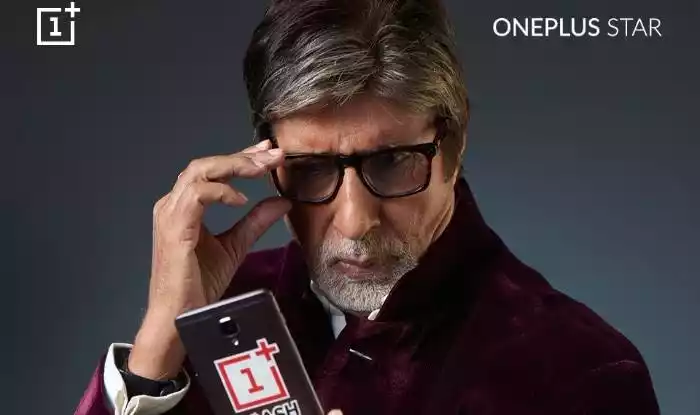
OnePlus announced Amitabh Bachchan as its brand representative in India in March 2017, naming him the first "OnePlus Star," a title the company used for a select group of prominent OnePlus users. Pete Lau, CEO and founder of OnePlus, framed the signing around the brand's next stage of growth, saying the company wanted to "bond with our community in a more meaningful and engaging way" and that the association would "help the brand scale new heights." Amitabh Bachchan's own statement pointed to specifics rather than generic praise, describing OnePlus as "a truly disruptive technology company known for its premium quality and craftsmanship" and noting that he was "being a OnePlus user myself."
Vikas Agarwal, then General Manager of OnePlus India, was direct about the underlying strategy. He said the company wanted to "penetrate new user groups and experiment with new marketing channels," and specifically chose Bachchan because he was "one of the most consistent performers" and "also tech savvy." This framing matters because it positions the partnership as a deliberate expansion tactic rather than a simple visibility exercise, aimed at extending OnePlus beyond the digitally native, tech-enthusiast audience that had defined its early years in India.
Why Amitabh Bachchan Fits OnePlus' Premium Positioning
The distinction between fame and fit is worth drawing out clearly here. Many well-known Indian celebrities could have generated attention for OnePlus. Fewer carry the specific combination Agarwal described: mass appeal across income and age groups, paired with a credibility that does not depend on youth or trend-driven relevance.
Business Standard's coverage of the campaign captured this balance directly, noting that Bachchan "walks the same line as a superstar with mass appeal" while the brand's advertising simultaneously "pitched OnePlus against Apple, Google and Samsung," positioning it within the premium category. Agarwal's own words reinforced this, saying Bachchan's "personality resonates well with our brand mantra."
OnePlus needed a figure whose presence could support a premium positioning against established global brands while still being broadly recognisable enough to reach new, less tech-focused audiences, and Bachchan's decades-long public presence across both mass entertainment and credible roles offered that specific combination.
Amitabh Bachchan and OnePlus Collaboration Ads
The campaign's most documented moment came with television advertising timed around a major cricket event. According to contemporary discussion on GSMArena, an advertisement featuring Bachchan aired repeatedly during the India vs Pakistan Champions Trophy final in June 2017, a broadcast with an estimated viewership of several hundred million people.
This placement reflects a deliberate move away from OnePlus' earlier, narrower digital-only advertising approach toward mainstream television reach, using one of the most-watched sporting broadcasts in the country to introduce Bachchan as the face of the brand to a genuinely mass audience.
The advertising also tied directly into product news. OnePlus used the campaign period to promote the OnePlus 5's launch date and its Amazon exclusivity in India, connecting Bachchan's endorsement to a specific, current flagship release rather than a generic brand statement disconnected from any actual product. Shortly after his signing, the company also launched a "Best Smartphone Contest" in partnership with Bachchan, tied to the OnePlus 3T's strong consumer ratings on Amazon India at the time, again grounding his celebrity presence in a specific, verifiable product claim rather than an abstract association.
Across this activity, the consistent thread is that OnePlus used Bachchan's presence to support concrete brand and product messages, premium positioning against established competitors, a specific flagship launch, real consumer ratings, rather than relying on his fame in isolation to carry the campaign.
From Celebrity Recognition to Premium Technology Branding
A well-established celebrity's presence can shape the context in which a product gets evaluated, without doing that evaluative work itself. OnePlus' decision to pitch its advertising against Apple, Google, and Samsung, while featuring Bachchan prominently, suggests the company wanted his recognisability to lend a sense of scale and seriousness to that comparison, since a mass-market audience unfamiliar with OnePlus specifically might reasonably ask why a smaller, newer brand belonged in that conversation at all.
It would be an overstatement to suggest Bachchan's presence alone created OnePlus' premium image in India. Brand positioning rests on multiple factors working together: product design and performance, pricing, retail strategy, and marketing messaging, of which celebrity endorsement is one component. What his association plausibly did was give that broader positioning a familiar, credible face at a moment when OnePlus was trying to expand beyond its original, narrower customer base.
How OnePlus Uses Celebrity Branding in Technology Marketing
For a technology brand moving from a niche, enthusiast-driven identity toward broader recognition, celebrity branding offers a way to signal legitimacy quickly. Agarwal's own comments about wanting to "educate users about the brand and the OnePlus community" point to a specific communication goal beyond simple product promotion, using Bachchan to introduce OnePlus itself as a serious, trustworthy option to audiences who may not have previously encountered the brand through its earlier online-only, invite-based sales model. The celebrity's role here supported that broader introduction rather than replacing the product-specific claims, like the OnePlus 5 launch and the OnePlus 3T's consumer ratings, that ran alongside his campaign.
Amitabh Bachchan as a OnePlus Brand Ambassador

As OnePlus' first brand ambassador and inaugural "OnePlus Star" in India, Bachchan's association gave the company a recognisable face across a period when it was actively shifting its advertising strategy, moving from a purely digital, referral-based approach toward mainstream television and mass-market campaigns. This kind of foundational ambassador role matters because it set a precedent for OnePlus using celebrity association as part of its India strategy going forward, rather than remaining reliant solely on its early online community-building approach.
Why Premium Technology Brands Need the Right Celebrity Fit
The chain connecting Bachchan's image to OnePlus' positioning follows a specific logic: his established, credible public persona supported a premium comparison against global competitors, while his mass appeal across income and age groups supported the brand's simultaneous goal of reaching new, broader user groups.
A different celebrity, one associated purely with youth culture or purely with luxury exclusivity, may have supported one of those goals but not both simultaneously. Celebrity fit is not universal; a personality well suited to OnePlus' specific dual ambition, premium credibility alongside mass reach, would not necessarily suit a brand pursuing a narrower or differently positioned strategy.
Celebrity Credibility and the Communication of Technology
OnePlus' advertising combined Bachchan's personal credibility with specific, current product information, the OnePlus 5 launch, OnePlus 3T ratings, rather than leaving his presence to stand in for technical substance on its own. This distinction matters.
His role was not to establish OnePlus' technical credentials personally, but to make the surrounding communication, the launch announcements, the contest, the brand's broader introduction to new audiences, feel more familiar and easier to engage with than a purely specification-driven campaign might have.
What Amitabh Bachchan and OnePlus Teach Us About Celebrity Marketing
A few lessons follow from this case. Celebrity selection for a brand pursuing dual goals, premium credibility and mass reach, benefits from a figure whose public image genuinely supports both simultaneously, as Bachchan's did for OnePlus. Tying a celebrity campaign to specific, verifiable product moments, a launch date, a consumer rating, a contest, gives the association concrete substance beyond recognisability alone. And a foundational ambassador signing, OnePlus' first in India, can mark a broader strategic shift in a brand's marketing approach, not just a single campaign.
Conclusion
The Amitabh Bachchan and OnePlus partnership illustrates how a technology brand can use a highly recognisable celebrity to reinforce its premium communication while making its advertising feel more familiar to a broader Indian audience. His established credibility supported OnePlus' positioning against global competitors, while his mass appeal helped the brand extend beyond its original, narrower customer base, with the actual campaign activity, television placement during a major cricket final, ties to specific product launches and ratings, keeping that association grounded in concrete brand moments rather than fame alone.
For a technology brand, the broader takeaway is that the right celebrity can add familiarity and personality to a premium product story, provided the celebrity's image genuinely supports the brand's specific positioning and the product itself remains central to what the advertising is actually communicating.



 Birthday Gifts
 Women
Women
 Men
Men
 Anniversary Gifts
 Wedding Gifts
 Search from 15000+ celebs


 We now support international payments