Amul’s Brand Philosophy: Everyday Products, Sharp Cultural Voice
Amul recognised early that butter, cheese, and milk are not impulse products. People do not need to be persuaded to want them. What they do need is brand recall at the moment of purchase.
Instead of explaining product benefits repeatedly, Amul focused on:
- Staying present in people’s minds daily
- Associating the brand with intelligence and wit
- Making Amul feel “aware” of what India is talking about
This shifted Amul’s advertising role from selling to commenting, which gave it permission to speak more often without sounding repetitive.
The Amul Girl: How Mascot Marketing Built Instant Recall
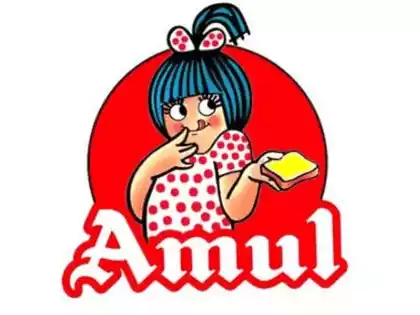
The Amul Girl wasn’t just a cute cartoon; she was a deliberately designed marketing tool created to help Amul stand out against competitors and stay top-of-mind over decades. She first appeared in 1966 when Amul hired adman Sylvester da Cunha and illustrator Eustace Fernandes to craft a billboard campaign for butter. The brand had previously lacked a distinctive face, but this young girl with blue hair and a red polka-dotted dress changed that instantly. Her debut hoarding, showing her kneeling in prayer with the line “Give us this day our daily bread with Amul Butter,” became memorable almost overnight.
What made the Amul Girl effective wasn’t constant redesign or trendiness; it was visual consistency paired with topical shifts. Because her look stayed nearly the same over decades, audiences could recognise an Amul advertisement from afar, even before reading the copy. That meant hoardings on busy streets or at traffic junctions grabbed attention immediately and created habitual recognition.
The genius lay in her flexible narrative role. She didn’t simply represent butter; she became a cultural commentator in cartoon form. Over the years, she has appeared:
- Reacting to political headlines with topical puns about elections and leaders.
- Applauding India’s cricket achievements with slogans tied to iconic moments.
- Referencing film releases and social trends with witty one-liners.
Because the Amul Girl was fictional, Amul could cheekily comment on real events, even controversial ones, without tying the message to the reputation of a real celebrity. That neutral yet opinionated presence let the brand stay playful and relevant, and turned billboard viewing into a kind of weekly cultural ritual that people expected and sought out, especially in urban centres where hoardings were placed.
Topical Advertising: Turning Current Events into Daily Brand Moments
Amul doesn’t just claim to be part of the Indian conversation it literally responds to ongoing cultural, political, and sporting events faster than most brands. Because these responses reference specific happenings that millions are already talking about, each ad becomes a shareable moment and a subtle brand touchpoint.
Key ways Amul’s topicals stay relevant
- Cricket celebrations and reactions: When Virat Kohli scored his 50th ODI century, Amul released a topical showing the Amul Girl cheering him with buttered toast tying a national cricketing achievement to the brand’s visual language. After Royal Challengers Bengaluru won the Women’s Premier League 2024, Amul congratulated the team with a punny line, “Royal Challengers have a bun galore!” featuring the Amul Girl with Smriti Mandhana and buttered bread.
- National pride and global achievements: Amul joined the Olympic spirit in 2021 by celebrating Neeraj Chopra’s gold with the Amul Girl in action pose, co-opted into a javelin throw moment with a butter twist. When Ronaldo became the highest goal scorer in football history, Amul released a celebratory ad acknowledging the milestone for global sports followers.
- Social trends and viral culture: The brand responded to India’s “pawri ho rahi hai” internet meme with a playful caption (“Yeh humari paw-tea ho rahi hai”) and the Amul Girl in a party scenario, turning a viral meme into brand content. During debates on data privacy and app security, Amul released a topical showing the Amul Girl hiding her phone from “internet monsters” with the tagline “Appset” directly referencing the digital moment.
- Local & civic moments that grabbed attention: When Mumbai’s local trains restarted after pandemic closures, Amul posted a topical with the Amul Girl and “Back on Track,” resonating with daily commuters. Fuel price hikes inspired a tongue-in-cheek ad showing the Amul Girl sulking over high prices with a pun on “Painfuel” making a common economic concern feel lighter.
- Political and global events: Amul has released topicals on election results and global leadership changes. For instance, symbolic ads on Indian state elections and Nobel Prize winners like Abhijit Banerjee combined real news with witty Amul commentary. On international controversies such as the Coldplay “Kiss Cam” moment that went viral in 2025, Amul responded quickly with its own social media take, showing its agility beyond Indian headlines.
What makes this effective
- Speed and relevance: Amul topical ads often appear within hours or days of an event, so they feel conversational rather than retrospective.
- Puns tied to familiarity: Wordplay like “Appset” or “Back on Track” anchors the event in a context consumers already understand, making the message feel intuitive.
- Product placement as signature, not pitch: The butter or toast is present but never aggressively sold; it acts like a watermark that reminds people of Amul while they enjoy the joke.

Why Amul Rarely Needs Celebrities to Stay Relevant
Amul’s marketing deliberately avoids traditional celebrity endorsements, and there are clear strategic reasons for this rooted in the brand’s history and execution. Here’s why this works for Amul:
1. Avoiding Celebrity Risk and Overshadowing
- Amul’s creative team historically resisted using brand ambassadors because a celebrity can become more relevant than the product itself. This was a conscious choice by long-time creators like Bharat Dabholkar, who preferred to build the brand voice without star dependence.
- With celebrities, the public narrative can shift quickly due to scandals, changing popularity, or overexposure. Amul sidesteps this risk by keeping its personality consistent and independent of celebrity fortunes.
2. The Amul Girl Became the Brand’s Own “Celebrity”
- Rather than borrowing fame, Amul created its own cultural icon. Advertising experts note that the Amul Girl is more memorable than many mascots precisely because she talks back to culture in her own voice.
- This turned the mascot into a brand ambassador in perpetuity without paying fees or managing egos; the brand’s identity itself became the recognizable face.
3. Mascot Flexibility Lets Amul Comment Freely
- Because the Amul Girl is a fictional character, she can joke about world events, pop culture, politics, and even other celebrities (e.g., deepfake controversies or Cannes wins) in real time without risking a celebrity’s image.
- A real celebrity tied to a specific cause or persona can limit what a brand can say; Amul’s mascot has no such limitations, only boundaries of taste and relevance.
4. Cost-Effectiveness and Creative Control
- Long-running brand mascot campaigns are cheaper and more controllable than paying for A-list celebrity endorsements. Early Amul governance and creatives explicitly chose this path to keep advertising straightforward, economical, and self-contained.
- This also lets the brand refresh hoardings weekly (or more) without renegotiating deals or aligning with celebrity schedules.
6. Legacy and Continuity Over Trends
- Amul’s team has been creating ads for decades with the same core voice and mascot, evolving only the context, not the messenger. This continuity means Amul’s communication feels familiar across generations, whereas celebrity campaigns often date themselves quickly.
In short, by not relying on celebrity endorsements, Amul built a self-sustaining brand presence that:
- Avoids dependency on individual public figures,
- Keeps creative freedom high,
- Uses a mascot that audiences expect to see commenting on culture,
making the brand itself feel like a part of everyday life rather than a product being sold.
This strategy has helped Amul remain culturally relevant without trend chasing for over half a century.
What Modern Brands Can Learn from Amul’s Mascot-Led Strategy
1. Build Long-Term Recognition with a Consistent Mascot
- Amul used the same character, the Amul Girl, since the 1960s, making her a visual cue that audiences recognise before they read anything. This deep recall beats one-off celebrity faces because the mascot itself becomes the brand’s voice.
- The mascot anchors the brand across generations; someone who first saw Amul hoardings as a child still recognises the ads decades later.
2. React to Culture Rather Than Push Products Directly
- Instead of repetitive product pitches, Amul uses topical marketing to comment on national moments from sporting achievements to viral memes, making the brand part of everyday discussion.
- This makes the ads feel like light conversation pieces, so they’re shared, talked about, and even archived as cultural snapshots.
3. Use Humor and Wordplay to Humanise the Brand
- Amul’s ads use simple visuals and short puns tied to current events, which makes them feel approachable and memorable. People don’t feel sold to; they feel entertained.
- Humor also helps the brand bridge diverse audiences: cricket fans, moviegoers, politics watchers, and even meme lovers all find something familiar in its hoardings.
4. Stay Relevant Across Media, Old and New
- What started as billboards and print ads now lives on social media with the same creative tone and visual identity. This shows that strong creative foundations can adapt to new channels without losing impact.
- The consistent art style and mascot visuals make even social posts instantly recognisable.
5. Create Content People Look Forward To
- Amul’s frequent topical ads make audiences expect new content, turning ads into cultural habits rather than noise. People often check for the latest Amul take on news, which extends the brand’s mental presence beyond purchases.
- This expectation has turned hoardings into what some marketers now call early “meme marketing,” sharing and discussing content for reasons other than commerce.
6. Balance Relevance with Brand Values
- Amul’s use of social commentary stays playful and safe, avoiding divisive topics while still being topical. This balance shows that relevance doesn’t mean controversy; the brand reacts in ways that keep consumers smiling, not alienated.
-
Why Amul’s Approach Works, But May Not Fit Every Brand
Amul’s topical, mascot-led strategy is iconic, but its success depends on specific brand and cultural conditions that many other brands do not automatically have. Here’s a breakdown of why it works for Amul and why it may not translate directly to other brands:
1. Legacy and Long-Build Cultural Equity
Amul’s topical ads and the Amul Girl have been published for decades, with the mascot first appearing in 1966 and continuing to comment on culture ever since. This lifetime of presence has built immense recall and goodwill that new brands simply don’t start with. Because the mascot is ingrained in Indian cultural memory, audiences automatically recognise a new Amul ad, which helps the brand stay relevant without heavy persuasion.
Why this limits other brands
Most brands don’t have decades of emotionally familiar advertising behind them; launching a topical mascot from scratch doesn’t instantly grant the same trust and recognition.
2. High Speed and Editorial Discipline Required
Amul’s creative team monitors current events closely and can produce witty, culturally relevant ads rapidly, often within hours of news breaking. Their ability to balance humour, sensitivity, and relevance without slipping into insensitivity (e.g., avoiding controversial misreadings) is key to success.
Why this limits other brands
Many brands lack the agile creative infrastructure and editorial judgement needed to react quickly and safely. Misreading a cultural moment can backfire, especially for brands without strong context or experience.
3. Humor Must Resonate with Broad Cultural Understanding
Amul’s topicals lean heavily on puns and cultural knowledge, like turning “pawri ho rahi hai” into “Yeh humari pav-tea ho rahi hai.” The humour often reflects national sentiment (e.g., celebrating sports wins or poking fun at tech trends), which feels natural for a household staple brand.
Why this limits other brands
Not every brand has a product or audience context where humour feels appropriate or where widespread cultural literacy can be assumed. If humour misfires or feels forced, it can harm brand perception.
4. Product Category Must Align with Light, Daily Conversation
Dairy products like butter are consumed regularly and have a non-controversial, everyday role in consumption. Amul’s voice works because it reflects the daily life conversations of millions. A witty cartoon about politics or cricket tied to butter doesn’t feel inappropriate because the product category isn’t tightly regulated or emotionally loaded.
Why this limits other brands
Topical advertising may be inappropriate or risky for categories where timing and tone are sensitive, e.g., healthcare, finance, safety gear, where “light” commentary could damage credibility rather than build trust.
5. Audience Expectations and Media Ecology
Amul ads are expected by the public; people look forward to “what the Amul Girl said today,” turning ads into cultural artifacts, not just marketing. This expectation amplifies brand visibility with minimal media spend and turns the brand into part of the cultural conversation.
Why this limits other brands
Most brands don’t have audiences conditioned to seek out their ads. Without that cultural anticipation, topical ads can feel like random noise rather than relevant commentary.
What Should Other Brands Opt for to Avoid the Limits of Mascot-Only Marketing?
For brands that cannot rely on a mascot-led, topical advertising model like Amul, celebrity endorsements offer a far more practical alternative. Celebrities bring instant recognition, emotional familiarity, and built-in trust, something a new mascot or brand voice would take years to establish. In categories where consumers actively compare options or seek reassurance, such as FMCG, beauty, electronics, or fashion, a well-chosen celebrity helps shorten the trust-building cycle and gives the brand immediate cultural relevance without needing decades of consistency.
Unlike mascot-driven communication, celebrity-led campaigns also offer greater flexibility and control. Brands can tailor messaging to specific launches, seasons, or audience segments, without being locked into a single tone or character forever. Celebrities can demonstrate real product usage, lend credibility to quality claims, and create sharper recall during high-impact moments like new launches or festive pushes. For most brands operating in competitive, fast-moving markets, celebrity endorsements provide a scalable way to stay visible, relevant, and aspirational while avoiding the long-term constraints of mascot-only marketing.
Get Celebrity & Influencer Promotions for Your Brand!
The right mix of celebrities and influencers can dramatically change how consumers perceive your brand. While celebrities bring instant recognition, authority, and mass reach, influencers add relatability and everyday context. Together, they help brands move beyond basic visibility and build trust, relevance, and recall across platforms where audiences actually spend time.
If you want your brand to stand out in a crowded market, combining celebrity presence with influencer-driven storytelling is a smart move. Platforms like Tring make it easier to collaborate with Bollywood celebrities, regional stars, and niche creators who naturally fit your brand’s tone and audience. Whether your goal is a big launch, consistent digital visibility, or stronger consumer trust, the right celebrity and influencer partnerships can help your brand connect faster, feel more authentic, and drive meaningful impact.



 Birthday Gifts
 Women
Women
 Men
Men
 Anniversary Gifts
 Wedding Gifts
 Search from 15000+ celebs


 We now support international payments