How marketing worked until now
Until recently, most campaigns were built in silos. Celebrity endorsements were used for mass awareness. A well-known face could instantly give a brand credibility and scale, especially during product launches or festive campaigns.
Influencer marketing, on the other hand, was treated as a separate layer. Brands worked with creators for social media visibility, engagement, and sometimes conversions. These campaigns were often short-term and transactional.
Event appearances were added as extensions. A celebrity at a launch event or a creator at a brand activation helped generate buzz, but it was rarely integrated into the larger strategy.
And then there was execution. Campaigns were slow to build, expensive to produce, and difficult to adapt once they went live. That model worked when media was less fragmented. It does not work anymore.
The shift: AI, creators, and celebrities now have defined roles
What is changing now is not just the tools, but the structure of influence itself.
- AI is becoming the engine that drives planning, speed, and personalization
- Creators are becoming the voice that builds trust and drives action
- Celebrities are becoming the signal that creates scale and cultural relevance
Instead of competing with each other, these three are starting to work together. That is what will define marketing in 2026.
AI will reshape how campaigns are built and distributed
AI is quietly becoming the most important layer in marketing, not because it replaces creativity, but because it changes how fast and how often brands can execute.
Campaigns that once took weeks can now be built, tested, and refined in days. Messaging can be adapted across platforms without starting from scratch. Content can be repurposed into multiple formats without losing consistency. More importantly, AI is changing discovery.
People are no longer just searching. They are asking. Recommendations are no longer just ads. They are generated responses. That means brands need to think about how they appear not just on social media, but inside AI-driven environments.
In simple terms, AI will decide what gets seen first.
For brands, this means:
- Faster campaign execution
- More content variations across platforms
- Better audience targeting without increasing costs
- Stronger visibility in AI-driven discovery
But AI alone does not build trust. That is where creators come in.
Creators will become the trust and conversion layer
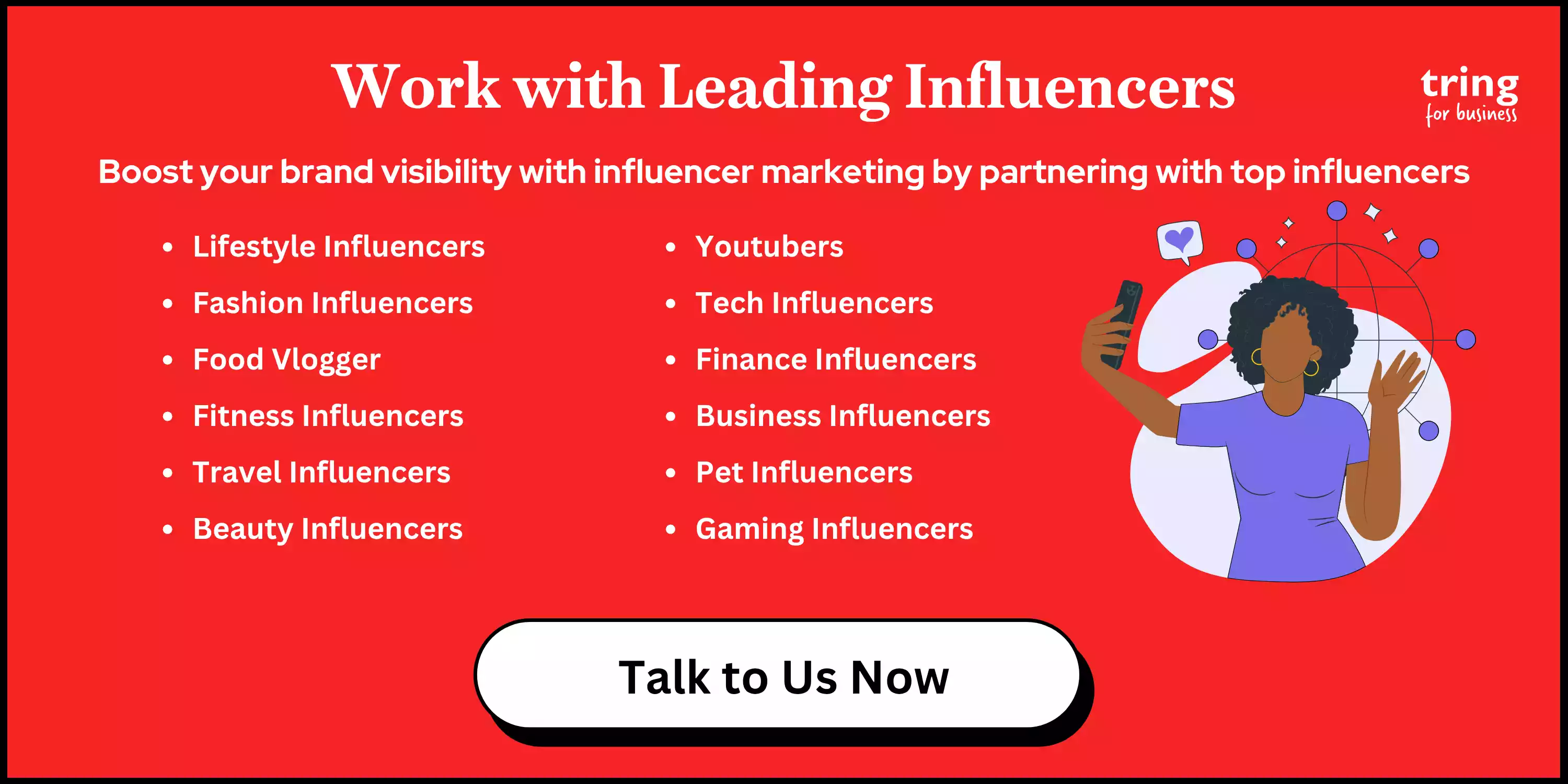
Influencer marketing is no longer an add-on. It is becoming the core of how brands connect with audiences. The reason is simple. People trust people more than they trust brands.
Creators sit inside communities. They speak the language of their audience. They make products feel usable, not just desirable. That makes them far more effective when the goal is engagement, credibility, and actual conversions.
But there is also a shift happening within influencer marketing itself.
Brands are moving away from:
- One-off paid posts
- Vanity metrics like follower count
And moving toward:
- Long-term creator partnerships
- Content quality and storytelling
- Niche relevance over mass reach
This is why smaller creators are becoming just as important as larger ones. They bring depth, not just reach. In 2026, influencer marketing will not just support campaigns. It will carry them.
Celebrity endorsements will become more selective but more powerful
Celebrity endorsements are not going away. They are becoming more intentional. Earlier, brands used celebrities as default choices for visibility. Today, that approach feels forced unless there is a clear fit.
When used correctly, celebrities still do something no one else can do. They create instant recognition. They bring aspiration. They give a campaign a sense of scale that feels bigger than a typical ad. But the role is changing.
Celebrities are now being used:
- For high-impact campaigns
- For premium positioning
- For moments that need cultural attention
This is why you will see fewer random endorsements and more carefully chosen collaborations.
Event appearances will turn campaigns into real-world moments
One of the most underrated shifts in marketing is the growing importance of event appearances. A campaign today is not complete if it exists only online.
When a celebrity shows up at a launch, or a creator attends a brand event, the campaign moves from content to experience. It becomes something people can see, record, and share in real time.
Event appearances add:
- Social proof
- Media coverage
- Authenticity beyond a scripted post
- High-volume content for digital distribution
This is why more brands are investing in launches, pop-ups, and experiential campaigns. They are not just events. They are content engines.
The new hybrid model brands will rely on
The future is not AI vs influencers vs celebrities. It is how all three work together.
A strong campaign in 2026 will look something like this:
- AI builds and optimizes the campaign
- Creators make it relatable and trustworthy
- Celebrities amplify it to a larger audience
- Event appearances bring it into the real world
What brands should start doing now
If you are planning marketing for 2026, the first step is to stop thinking of these three forces as separate tactics. They are parts of one operating model. AI should help with research, content planning, repurposing, and campaign testing. Creators should be chosen for fit, not just size. Celebrities should be reserved for moments where the brand truly needs scale, prestige, or a bigger public stage.
A good planning checklist would look like this:
- Make your content easy for both people and AI systems to understand. Kantar’s 2026 trends put this at the center of future discovery.
- Use creators in longer partnerships, not just one-off posts. WPP and CreatorIQ both show that fit, content quality, and ROI are now the key filters.
- Use celebrities where the campaign needs a premium signal or a cultural moment. That is where they still outperform simpler forms of promotion.
- Measure more than reach. Track recall, trust, purchase intent, brand safety, and how well the message travels across channels.
Conclusion
Marketing in 2026 will be shaped by a new balance of machine intelligence, creator trust, and celebrity visibility. AI will help brands move faster and stay findable in AI-led discovery. Creators will remain the strongest bridge between brand and consumer. Celebrities will still matter, but only where their presence adds something meaningful to the story.
The brands that do best will not treat these as competing trends. They will treat them as parts of the same system. AI will shape how the message is made. Creators will shape how it is believed. Celebrities will shape how widely it is noticed. That is the real future of marketing.



 Birthday Gifts
 Women
Women
 Men
Men
 Anniversary Gifts
 Wedding Gifts
 Search from 15000+ celebs

 We now support international payments